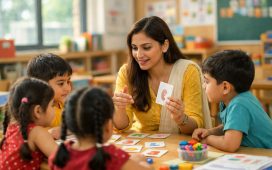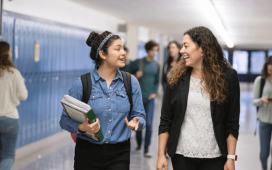


Education, in its many forms, has long been considered the cornerstone of human development and societal progress. For centuries, institutions of learning have served as the bedrock upon which civilizations have built their futures, transmitting knowledge, shaping values, and equipping individuals with the tools to navigate an increasingly complex world. Today, however, education finds itself at the precipice of profound transformation, driven by technological advancements, evolving societal needs, and a growing recognition of the importance of personalized learning. As we look toward the future, it becomes clear that education must evolve in response to these changes, embracing innovation while preserving its core mission: to cultivate critical thinking, creativity, and lifelong learning.
The Traditional Model of Education: Strengths and Limitations
Historically, education has been largely defined by the formal, classroom-based model. This system, which traces its roots back to the ancient Greek and Roman empires, involves structured curricula, hierarchical teacher-student relationships, and standardized assessments. While this model has undoubtedly been effective in producing educated individuals who can contribute to society in various ways, it is not without its limitations.
One of the primary criticisms of the traditional education system is its one-size-fits-all approach. The rigid structure of classrooms, where students are grouped by age rather than ability or interest, often leads to a lack of engagement for many learners. Students who may not fit neatly into the conventional mold may struggle to find their passions or excel in subjects that do not align with their strengths. Furthermore, the emphasis on standardized testing as the primary measure of academic success can stifle creativity and reduce the educational experience to a series of grades and scores, rather than fostering a deeper understanding of the material.
Additionally, the traditional education model tends to focus heavily on theoretical knowledge rather than practical skills. While subjects such as mathematics, history, and literature are undeniably important, the growing demand for skills like critical thinking, problem-solving, communication, and emotional intelligence calls for a shift in educational priorities. The ability to adapt to change and think independently has become just as crucial—if not more so—than the accumulation of specific academic knowledge.
The Role of Technology: Empowering Learning in the Digital Age
In recent years, technology has become a driving force in the evolution of education. The rise of digital tools, from online courses and educational apps to virtual classrooms and artificial intelligence, has made learning more accessible, flexible, and personalized than ever before. This digital revolution has allowed education to transcend geographical boundaries, enabling students from all over the world to access high-quality resources and instruction at their fingertips.
One of the most significant benefits of technology in education is the ability to cater to diverse learning styles and paces. With the advent of online platforms like Khan Academy, Coursera, and edX, students can now learn at their own pace, revisiting lessons, taking quizzes, and accessing supplementary materials as needed. This flexibility is particularly beneficial for adult learners, working professionals, and individuals in remote or underserved regions, who may not have access to traditional brick-and-mortar institutions.
Moreover, technology has opened up opportunities for interactive and immersive learning experiences that were once unimaginable. Virtual reality (VR) and augmented reality (AR) are transforming the way students engage with complex subjects, offering simulations and experiences that bring abstract concepts to life. Imagine a medical student practicing surgery in a virtual environment or a history student walking through ancient Rome—such experiences provide a level of engagement that traditional textbooks simply cannot match.
Artificial intelligence (AI) also promises to revolutionize education by enabling highly personalized learning experiences. AI-driven platforms can analyze a student’s strengths, weaknesses, and learning preferences, tailoring content and feedback accordingly. This individualized approach not only enhances the learning experience but also ensures that students receive the support they need to succeed.
The Need for a Holistic Approach to Education
While technology has undoubtedly enhanced the educational experience, it is crucial to recognize that learning extends beyond the confines of the classroom or the screen. In an era marked by rapid change, the emphasis must shift toward a more holistic approach to education—one that nurtures the development of the whole person, not just their intellectual capacity.
This holistic model places equal importance on social and emotional learning (SEL), physical well-being, and the cultivation of character traits such as resilience, empathy, and integrity. As students face increasingly complex challenges in their personal and professional lives, the ability to navigate their emotions, work collaboratively with others, and demonstrate ethical decision-making becomes paramount. Educators and institutions must, therefore, create environments that foster emotional intelligence, mindfulness, and interpersonal skills alongside traditional academic learning.
Moreover, the rapidly evolving job market requires students to possess a broad set of competencies that go beyond specific subject knowledge. Employers are increasingly seeking individuals who are adaptable, innovative, and capable of working in multidisciplinary teams. Thus, education systems must prepare students not only for the specific careers of today but also for the careers of tomorrow, which may not yet even exist. This necessitates an emphasis on skills such as creativity, critical thinking, and a lifelong commitment to learning.
The Future of Education: Embracing Inclusivity and Lifelong Learning
Looking ahead, it is clear that education must become more inclusive and adaptable to the needs of an increasingly diverse global population. The future of education must embrace different learning modalities—online, offline, hybrid, and experiential—while ensuring that no one is left behind due to socioeconomic, cultural, or geographical barriers.
One of the key challenges in this regard is ensuring equitable access to educational opportunities. While technology has the potential to democratize education, there remains a significant digital divide between those who have access to high-speed internet, modern devices, and digital literacy, and those who do not. Policymakers, educators, and technology developers must work collaboratively to ensure that all students, regardless of their background, can benefit from the advancements in educational technology.
Moreover, the future of education must embrace the concept of lifelong learning. In a world where industries are constantly evolving, individuals will need to continually update their skills to remain competitive. The traditional notion of education as a finite process—completing a degree and entering the workforce—must be replaced with an understanding that learning is an ongoing journey. As such, adult education, vocational training, and professional development programs will become increasingly important in helping individuals navigate career shifts and adapt to new demands.
Conclusion
Education, in its many forms, will remain the driving force behind human progress, shaping individuals, societies, and the world at large. However, as we stand at the crossroads of technological advancement and shifting societal needs, it is imperative that we embrace a more flexible, inclusive, and holistic approach to learning. By leveraging the power of technology, prioritizing emotional and social development, and fostering a culture of lifelong learning, we can ensure that future generations are not only prepared to face the challenges of the modern world but are also equipped to thrive in it. In the end, education is not just about imparting knowledge—it is about unlocking the full potential of every individual, empowering them to contribute meaningfully to the world around them.