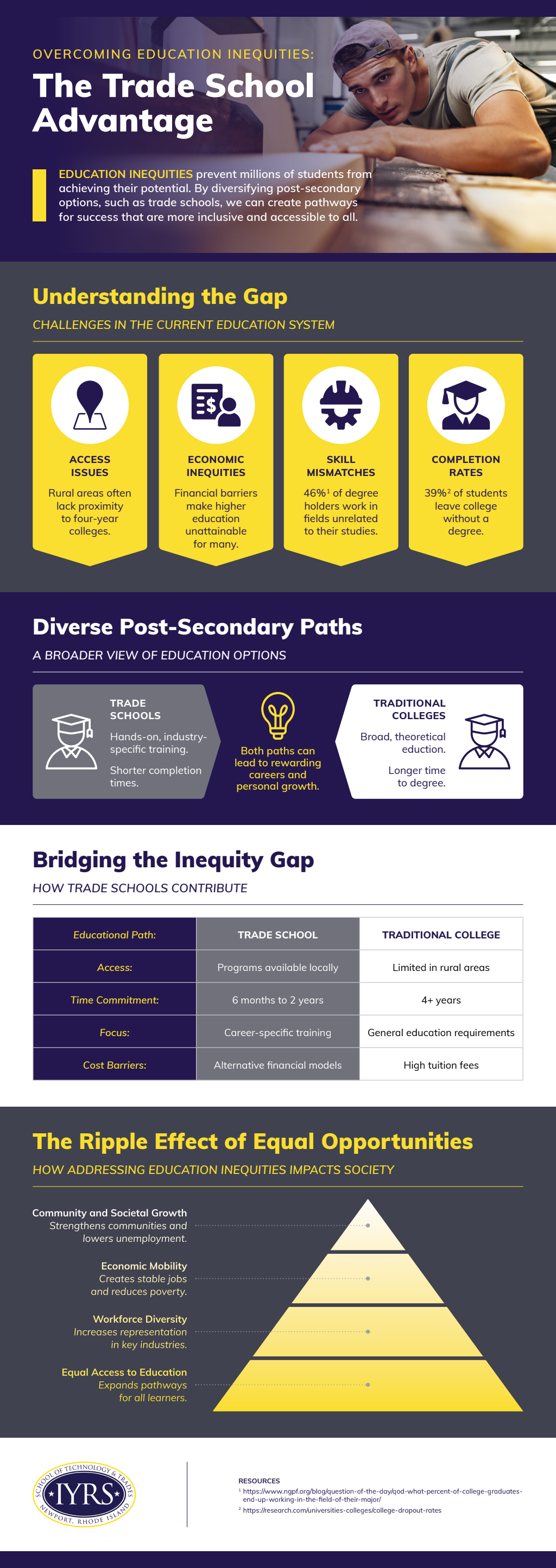


Educational inequality continues to affect students across the country, creating barriers that can limit career opportunities and long-term economic mobility. Factors such as income level, geographic location, school resources, and access to post-secondary education all influence a student’s ability to pursue their goals. While four-year colleges are often viewed as the traditional path to career success, they are not the only option, nor are they equally accessible to every student.
As workforce needs continue to evolve, trade schools have emerged as an important avenue for expanding educational and career opportunities. By offering specialized training focused on practical skills and workforce readiness, these institutions provide an alternative pathway that can help address longstanding gaps in access to education and employment.
Creating Accessible Career Pathways
Trade schools are designed to prepare students for specific occupations through focused, hands-on instruction. Programs are available in a wide range of fields, including healthcare, skilled trades, information technology, transportation, and manufacturing. Rather than requiring several years of broad academic coursework, students can often complete their training in a shorter timeframe and enter the workforce with industry-relevant credentials.
This accessibility can be particularly valuable for individuals who face financial, geographic, or personal barriers to attending a traditional college. Lower tuition costs, shorter program durations, and direct connections to employment opportunities make trade education an attractive option for many learners seeking practical career preparation.
For communities that have historically experienced limited access to higher education, these programs can create new opportunities for economic advancement and workforce participation.
Addressing Workforce and Community Needs
Trade education also helps align training with labor market demand. Many industries face ongoing shortages of qualified workers, creating opportunities for graduates who possess specialized technical skills. By connecting students directly to career pathways, trade schools can support both individual success and broader economic development.
In addition to benefiting students, these programs can strengthen local communities by helping employers fill critical positions and supporting regional workforce growth. This connection between education and employment makes technical training an important component of long-term economic resilience.
Expanding Access Through Multiple Learning Models
While trade schools play an important role, reducing educational inequities requires a broader approach. Different communities face different challenges, making it important to offer a variety of educational pathways and delivery methods.
Online learning opportunities, industry-sponsored certification programs, mobile training initiatives, and apprenticeship models can help extend access to students who may not have nearby educational resources. Partnerships between educational institutions and employers can further strengthen these efforts by creating training programs that reflect current workforce needs.
Providing multiple options helps ensure that students are not limited by geography, financial circumstances, or access to traditional educational institutions.
Changing Perceptions Around Career Education
One challenge facing trade and technical education is the perception that four-year degrees represent the only path to professional success. Despite strong employment outcomes and growing industry demand, vocational training programs are sometimes viewed as secondary options.
Addressing these perceptions requires greater awareness of the opportunities available through skilled trades and technical careers. Highlighting successful graduates, sharing workforce outcomes, and educating families about alternative career pathways can help students make more informed decisions about their futures.
As labor markets continue to evolve, the value of career-focused education is becoming increasingly clear across a wide range of industries.
Supporting Students Through Policy and Guidance
Public policy can play an important role in expanding access to technical education. Increased funding for career and technical training programs, broader financial aid opportunities, and stronger collaboration between educators and employers can help reduce barriers for students pursuing these pathways.
Career counseling, mentorship programs, and workforce development initiatives also provide valuable support. These resources help students understand available opportunities, navigate educational decisions, and transition successfully into the workforce.
Building More Inclusive Educational Opportunities
Educational inequities are complex and cannot be addressed through a single solution. However, expanding access to trade schools and other career-focused training programs represents an important step toward creating more inclusive opportunities.
By offering practical, affordable, and workforce-aligned education options, trade schools help broaden access to meaningful careers while supporting the needs of both students and employers. When combined with supportive policies, community partnerships, and expanded learning opportunities, these pathways can contribute to a more equitable and accessible education system for future generations.