

Choosing a phonics class for a preschooler can feel like a big step. At this age, children are still learning how to listen, speak, play, and express ideas. They need lessons that feel warm, active, and easy to follow.
A good phonics class should not feel like a drill session. It should help children understand how sounds and letters work together. It should also help them enjoy words, stories, songs, and early reading.
For preschoolers, the goal is not only to read faster. The goal is to build strong language foundations in a way that feels natural and age-appropriate.
Why Phonics Matters In The Preschool Years
Phonics helps children connect spoken sounds with written letters. For example, a child learns that the letter “m” makes the /m/ sound. Over time, they use this knowledge to read simple words.
This is important because reading is not only about memorising words. Children also need to understand sound patterns. When they can hear, say, and blend sounds, they become more confident with reading and spelling.
A strong early phonics foundation can support:
- Letter recognition
- Sound awareness
- Early reading
- Early spelling
- Clearer speech and listening
- Stronger confidence with books
This is why parents should look beyond worksheets. A preschool phonics class should help children enjoy language while learning real reading skills.
A Clear And Structured Phonics Class
Preschoolers need clear steps. They learn best when lessons move from simple to more complex skills.
A good class should teach sounds in a planned order. Children should first learn basic sounds. Then they can move on to blending, segmenting, simple words, and short sentences.
The lesson should not jump too quickly. If children feel rushed, they may lose confidence. If the class is too slow, they may lose interest.
Parents can ask whether the programme follows a clear path. A strong structure helps children know what to expect. It also helps teachers track each child’s progress.
Learning Through Play And Interaction
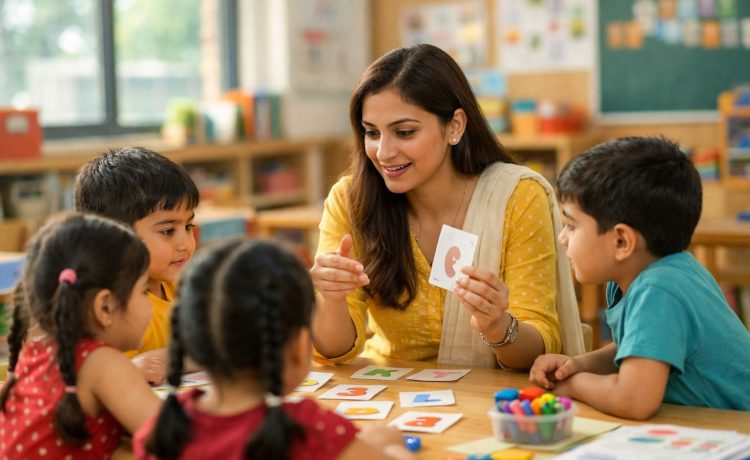
Young children learn through movement, music, stories, and hands-on tasks. A good phonics class should include active learning, not just sitting and writing.
Look for lessons that use:
- Songs and rhymes
- Letter games
- Picture cards
- Puppets or props
- Storytelling
- Sound matching games
- Simple reading activities
These activities help children stay focused. They also make abstract ideas easier to understand.
For example, a child may remember the /s/ sound better when it is linked to a snake puppet, a song, or a movement. This kind of playful learning helps phonics feel fun and memorable.
Teachers Who Understand Young Children
The teacher plays a key role in a preschool phonics class. Young children need patient teachers who can guide them gently.
A good teacher should know how to keep lessons calm, lively, and supportive. They should be able to spot when a child needs help. They should also know when to give praise and when to offer a new challenge.
Parents should look for teachers who use clear speech and simple instructions. They should also create a safe space where children feel comfortable trying.
Mistakes are part of learning. A child who feels safe is more likely to speak up, try new sounds, and take part in reading tasks.
A Focus On Listening And Speaking
Before children can read well, they need to hear sounds clearly. This is why listening and speaking should be part of any strong phonics programme.
Children should learn to hear the first sound in a word. They should also practise rhyming words, syllables, and sound patterns. These skills support later reading.
Speaking activities also matter. When children say sounds aloud, they become more aware of how words are formed. This helps with both reading and spelling.
A good class should give children many chances to speak, repeat, respond, and share ideas.
Support For Reading, Writing, And Spelling
Phonics should connect to real language use. It should not be taught as a separate skill with no link to reading or writing.
Children should learn how sounds help them read simple words. They should also begin to see how sounds support spelling. For example, a child who hears the sounds in “cat” can start to write the letters c-a-t.
This does not mean preschoolers need heavy writing tasks. The activities should still match their age. They may trace letters, match sounds, build words, or read simple phrases.
The key is balance. Children should learn that phonics helps them use English in real ways.
Small Steps That Build Confidence
Confidence is one of the most important signs of a good class. Preschoolers should leave feeling proud of what they can do.
The best lessons give children small wins. These may include recognising a letter, blending a word, reading a short line, or joining a rhyme.
Parents should look for a class that celebrates progress. Not every child learns at the same pace. Some children may speak quickly, while others may observe first. Both learning styles are normal.
A strong programme gives each child time to grow.
Age-Appropriate Materials And Activities
Preschoolers need materials that suit their stage. The content should be bright, clear, and simple enough to follow.
Books should not be too hard. Worksheets should not take over the lesson. Activities should support learning without making children feel pressured.
Parents should also check whether the class matches their child’s age group. A four-year-old and a six-year-old may both learn phonics, but they may need different levels of support.
For example, Lorna Whiston’s Fun with Phonics supports young learners aged 4 to 6 through interactive activities, games, puppets, puzzles, stories, and songs while building reading, writing, spelling, and communication confidence.
Parent Communication And Progress Updates
Parents should know how their child is doing. A good phonics class should offer clear updates.
This does not need to be complex. Teachers can share what sounds were taught, what the child is practising, and what parents can do at home.
Simple home support can make a big difference. Parents can read aloud, sing rhymes, point out letters, and talk about sounds in daily life.
When home and class support work together, children get more practice in a gentle way.
Final Thoughts
The right phonics class should help preschoolers build reading skills with joy and confidence. Parents should look for clear structure, playful lessons, patient teachers, and age-appropriate support.
Phonics works best when children feel safe, curious, and ready to try. With the right class, early reading becomes less stressful and more meaningful. It becomes a strong first step toward better language, stronger communication, and a lasting love for books.