
Understanding Singapore’s Early Years Education Approach
Singapore preschools follow a unique approach that balances structured learning with creative play. The curriculum focuses on building strong foundations in key areas. Young children develop essential skills through carefully planned activities.
The education system emphasises holistic development rather than pure academics. Teachers create environments where children feel safe to explore and learn. This approach helps prepare students for primary school whilst maintaining their natural curiosity.
Key Components Of The Singapore Preschool Framework
Play-Based Learning Foundation
Play forms the cornerstone of early childhood education in Singapore preschool settings. Children learn through hands-on activities that feel natural and enjoyable. This method helps young learners absorb concepts without feeling pressured.
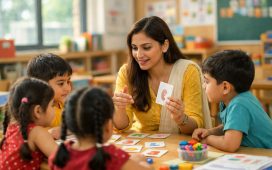
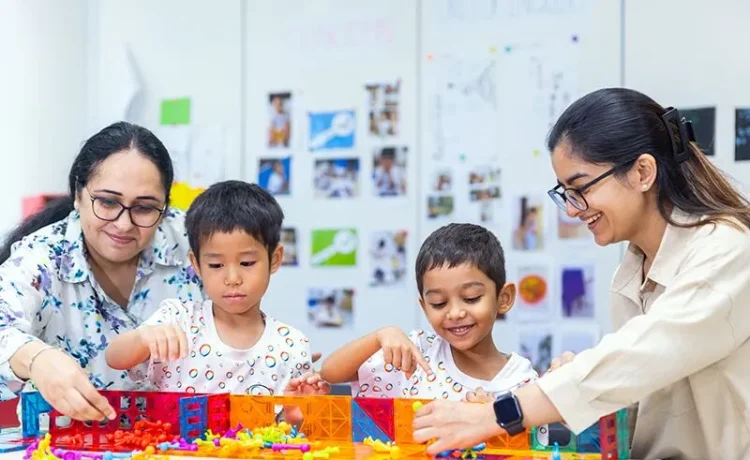
Teachers design activities that combine fun with educational objectives. Children might sort coloured blocks whilst learning about patterns and sequences. These experiences build cognitive skills in ways that feel like games rather than lessons.
Language Development Through Phonics
Phonics instruction starts early in Singapore preschool programmes to build reading readiness. Children learn letter sounds through songs, rhymes, and interactive games. This foundation helps them decode words when they begin formal reading instruction.
Teachers use multi-sensory approaches to make phonics engaging and memorable. Children might trace letters in sand whilst saying the sounds aloud. These activities strengthen the connection between visual symbols and spoken language.
Early Mathematics Concepts
Mathematics education begins with concrete experiences before moving to abstract concepts. Children explore numbers through counting toys, sorting objects, and simple problem-solving activities. This hands-on approach helps them understand mathematical relationships naturally.
Singapore preschool maths curricula introduce concepts like size, shape, and quantity through daily routines. Children might measure ingredients during cooking activities or count steps whilst walking. These real-world connections make mathematical thinking feel relevant and useful.
Benefits Of The Singapore Preschool Approach
Academic Readiness Without Pressure
The balanced curriculum ensures children develop academic skills without overwhelming stress. Young learners build confidence through achievable challenges that match their developmental stage. This approach creates positive associations with learning that last throughout their education.
Children master foundational skills at their own pace whilst maintaining enthusiasm for discovery. Teachers provide support and encouragement rather than rigid expectations. This nurturing environment helps students develop resilience and problem-solving abilities.
Social And Emotional Development
Singapore preschool programmes prioritise social skills alongside academic preparation. Children learn to share, communicate, and work together through group activities. These interpersonal skills prove essential for future classroom success and life relationships.
Teachers model positive behaviour and help children navigate social situations effectively. Students practice empathy, patience, and cooperation through collaborative projects. These experiences build emotional intelligence that supports both learning and personal growth.
Creativity And Critical Thinking
The curriculum encourages creative expression through art, music, and imaginative play activities. Children explore different materials and mediums to express their ideas freely. This creative foundation supports innovative thinking in all subject areas.
Problem-solving opportunities arise naturally throughout the day in Singapore preschool environments. Children might figure out how to build a tower or resolve conflicts with classmates. These experiences develop critical thinking skills that transfer to academic challenges.
Preparing Children For Future Success
Smooth Transition To Primary School
The comprehensive approach ensures children feel confident when entering formal education. They arrive with strong foundational skills in literacy and numeracy concepts. More importantly, they possess positive attitudes towards learning and school environments.
Singapore preschool graduates typically adapt quickly to primary school expectations and routines. They understand how to follow instructions, work independently, and seek help appropriately. This preparation reduces anxiety and supports continued academic progress.
Long-Term Educational Benefits
Research shows that quality early childhood education creates lasting advantages for students. Children who attend well-structured preschool programmes often perform better throughout their academic careers. The Singapore approach specifically supports both immediate readiness and long-term success.
The balanced curriculum develops multiple types of intelligence and learning styles simultaneously. Students build confidence, curiosity, and resilience that serve them well beyond their school years. These qualities prove valuable in higher education, career development, and personal relationships.