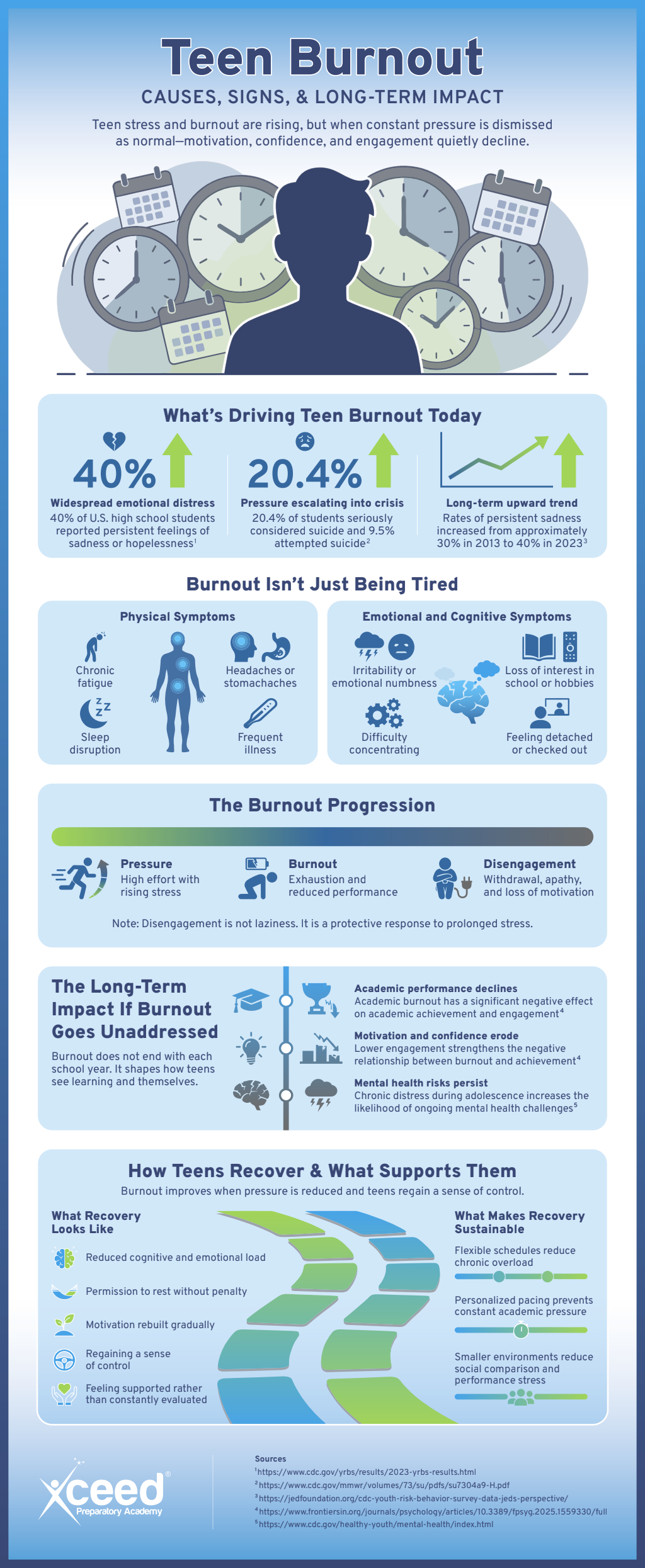


Academic success requires effort, but when stress becomes constant and recovery never happens, that effort can eventually give way to burnout. For many teenagers, burnout is not a sign of laziness or a lack of commitment. Instead, it reflects prolonged pressure without enough time, flexibility, or support to maintain a healthy balance.
Today’s students often juggle demanding coursework alongside extracurricular activities, social obligations, standardized testing, and plans for college or future careers. While each responsibility may be manageable on its own, the combined workload can become overwhelming over time, leaving students mentally and emotionally exhausted.
Understanding the Signs of Burnout
Burnout can develop gradually, making it difficult for parents and educators to recognize at first. Some students become irritable, tired, or anxious, while others simply lose interest in school and begin participating less in class. Declining grades, missed assignments, or reduced enthusiasm for activities they once enjoyed may also signal that a student is struggling.
These behaviors are often mistaken for poor motivation or a lack of discipline. In reality, they frequently indicate that the student has been operating under sustained stress for too long without sufficient opportunities to recharge.
As burnout progresses, students may begin questioning their abilities, even when they have previously performed well. Confidence declines, learning feels more difficult, and everyday academic tasks can become increasingly discouraging.
How School Structure Can Influence Student Well-Being
The way learning is organized plays an important role in how students experience academic pressure. Traditional school environments often require every student to move at the same pace, meet identical deadlines, and demonstrate learning in similar ways.
While this structure works well for some learners, others may benefit from greater flexibility. Students absorb information differently, manage workloads differently, and respond to stress in different ways. When educational environments allow for some adaptability, students are often better equipped to stay engaged without becoming overwhelmed.
Learning settings, like private schools, that offer smaller class sizes, individualized instruction, or more flexible scheduling can help students maintain academic progress while reducing unnecessary stress. Personalized support gives students opportunities to ask questions, work through challenges, and develop confidence at a pace that better matches their needs.
Supporting High Expectations With Healthy Balance
Helping students recover from burnout does not require lowering academic standards. Instead, it involves creating conditions that make sustained learning more achievable.
Encouraging healthy routines, allowing time for rest, promoting open communication, and providing opportunities for students to seek help when needed all contribute to a healthier learning experience. Flexible pacing and thoughtful academic support can help students regain confidence while continuing to work toward meaningful goals.
Recognizing that progress is not always linear also helps students develop resilience without feeling discouraged by temporary setbacks.
Creating Environments Where Students Can Thrive
Burnout is best viewed as valuable feedback rather than personal failure. It suggests that the current balance between expectations and available support may need adjustment.
When educators and families work together to identify stress early and respond with understanding, students are better positioned to reconnect with learning and rebuild their motivation. Schools that combine strong academic expectations with flexibility and personalized support can challenge students while also protecting their well-being.
By recognizing burnout as a signal for change rather than a lack of effort, families and educators can create learning environments where students have the opportunity to succeed both academically and personally.